


by Bryan Adrian
I couldn't get over the feel of her neck in my hands. It was smooth. On the backside little hairs stood up bristly hard. She was scared.
These tarts in the dregs of Billyburg are an unscrupulous lot. None of them could bring me the happiness I had known in San Francisco. Perhaps that's why this Dominican hooker lay dead now at my feet. She wasn't nice and didn't pretend to be. Business was her only game. Drugs, stolen credit cards, flesh ... whichever paid best for the night.
Any Yellow Cab driver could see she was destined to sell herself short sometime soon on a night no different than this one. But that was three days ago. When they found her body it was not a pretty sight. Bulging eyes and knotted tongue.
It all happened very matter of factly. I had just finished speaking on the phone with my beloved San Francisco sweet tart. The air was rank coming in through the double-fisted size window of my Williamsburg hovel. The customary sunny airs of my San Francisco sweet tart turned stale when I told her that Billyburg would be my home for some months longer. I honestly thought she would begin cursing at me in Greek, her native tongue. She had been acting peevish ever since the first time I had extended my stay here in NYC telling her "be patient baby, it's only a matter of time before I'm discovered." Now she was outright sarcastic upon receiving word that I was making my seventh or eighth extension of time spent here, even perhaps wasted time.
"You won't recognize me or my place when you finally get back!" she admonished.
"There have been lots of changes. New faces hang around my apartment ... always," she warned me.
After hearing this, my whole life was hungover. I needed a drink or a unicorn's horn. I slammed the door behind me and walked towards Cokies to kick back several shots at the corner coke club there.
Just a few late afternoon alcoholics were inside killing time and lines when I arrived. I parked myself on a stool and drained down five or six shots pretty quickly. A Dominican hooker, local Billyburg girl, strode into the bar very hastily. She had bee stung lips and a bust that was too large for her strained cotton tee shirt. There was an empty bar stool next to me and she sat on it. You can imagine how she straddled it. I could smell the crack vapors in her hair.
Very abruptly, she ordered a gin from the bartender. Her hand steadied after she drained a few more of the same. The cocaine glazing her lungs and doing the butterfly kick in her veins found the booze a compatible associate.
"What are you looking at rat ass?"
I didn't want to reply and hoped that she was addressing one of the other guys, preferably someone stinking drunk. I knew I was still hours away from reaching that blissful destination.
"Hey, I'm talking to you blockhead ... you a sordo?
"Look lady ... lay off. Don't make my day any worse."
"Maybe I got something make it better baby."
I looked her over without violating any civil rights and decided she could give me plenty of something. Physical harm, bad drugs, unwanted attention, and a bramble bush of venereal viruses as a going away gift.
"Don't think so chica," I replied. "Try that gent over there. He waits for action every evening and gets nothing. That's his special recipe for staying harmless."
"What? You jokin. He's queer. Just sits there all night and acts straight. He ain't worth nothin to me! He don't like crack. Not the banana oil tasting crack, the cement fragrant crack, not the urine streaked crack that looks like marble, you know what I mean? He's a waste of time!"
I shrugged my shoulders and tried to remember how my girl looked the last time I saw her doing her belly dance act in San Francisco's North Beach. Damned good. Hell, did I miss her.
Smoke from the many lonely guys smoking away on their cigarettes began to undulate in the middle layer of air swirling around the bar's interior. This place made my crappy little Bedford Avenue studio rate almost as high in fresh air as a state-or-the-art respiration machine for asthmatics. I stubbed out my cigarette and with it any notion of dancing with my sweet tart anytime soon.
"You said something about streaked marble rock?" I queried.
"Yeah," she said cool and confidently. "I got anything you want."
"All I want is rock crack, a good stem, and a full torch. No surprises. No sex."
She picked at her bright red nail polish and removed a patch of ground-in ash.
"Alright alright I heard ya. You don't have to spell it out for me. I read these Williamsburg streets fucking day in and day out."
I tipped the bartender and signaled to him that the hooker's last couple of unpaid drinks were not in any way my concern. He's a quick bartender and waited patiently while his streetwise customer counted out enough change from the bottom of her purse to pay her tab. The hooker now had money on her mind and very little else.
"You gonna sit there and suck down whiskey all night or ya gonna follow me and wrap your face around something much stronger than sex or bourbon?"
I answered her by getting up and leaving and following along side of her through unknown parts of Williamsburg. This was her turf. This part of greater NYC made the Tenderloin back home look like a putt-putt golf course.
"Act cool white boy. We're going in there," she said and pointed to a hulk of a building.
I looked up at a red brick four-story tenement structure a few doors away from Black Betty's, with most of its windows boarded up. Many people had recently been forced to move out of here. The criminal rents and Hassidic landlords had long ago established themselves as fine Williamsburg traditions.
In addition to that, as luck would have it, several nice college girls seeking crack as a new thrill, hopefully bigger a jolt than sitting around Pete's Candy Store, recently had their teeth punched out by thugs in these shadows. Those new twenty-somethings that couldn't hack it in this part of Williamsburg had few other choices --- Redhook, Coney Island, or someplace much less charming way out in the Queens hinterland.
Sometimes it's hard to tell the difference between a crack infested building and a newly gentrified yuppie apartment building. Some of the yuppie buildings accentuate the boarded-up look to deter dangerous elements and to make their building exterior look "in" for their friends who came down from Uptown for a quick visit. These are the same people who adore the School of Visual Arts advertisements plastered all over the city on the sides of Plexiglas bus stop shelters and subway overhead advertisements.
We entered the crack venue and felt our way through poorly lit stairwells. Piss streaked the walls and crumbling steps in variations on Jean Michel Basquiat's paintings. Construction workers with bloodshot eyes were busy going up and down the steps in hard hats and tool belts.
"They're working pretty late, aren't they?" I asked flatly to break the cold silence.
"Look Snow White. Them ain't workers, they're crack dealers. We got the cops paid off and this charade is to keep the decent neighbors still living here from bitching all the time to Brooklyn City Hall about what's going on twenty-four hours a day."
"We entered a busted up apartment on the fourth floor. The first thing I see is an ivory white complexioned nurse crying out in her New Jersey accent, "give me more, give me more, just one more hit!" She wasn't wearing her nurse's shoes tonight. I could see blood scabs in the spaces between each one of her toes where she had been shooting up also. The keys to her car were lying on a filthy tabletop and the Rx medallion on the key ring was clear for anybody to see.
She was a switch hitter. First heroin then crack, heroin then crack, then some speedball. "Up and down, kill the clown" I heard her say many times throughout the night. At the time I was trying to act as non-chalantly as I could on a cheap and rickety wooden stool. Just when I started to forget the precarious condition of the stool and was confident that I had my balance a troubling lament dominated all conversations and pierced the air.
"My kids my poor kids. What do I do? I was suppose to take my kids shopping for food and clothes this weekend and every bit of my six hundred bucks went into my high. What the fuck will I do now?"
The nurse sobbed until the drug lord of the house patted her on the shoulder, kissed her cheek softly and generously filled her crack pipe for her "on the house." My chair then collapsed from under my ass.
"Hey boss man, you!" he said to me. "You here to practice stunts or get high man ... huh! Get a hand on this."
I took a brand new stem with a robust shiny and silvery filter from the drug lord's hairy hands without bothering to get up off the floor. Then I sucked on the white plumes of crack for a full twenty seconds. A climax started in my brain and ripped through the rest of my body. This was beyond virtual reality. I was suddenly a woman being fucked by 500 Valentinos. I wanted more.
"Don't get too hungry man, there are many more mouths to feed here."
The drug lord knew his clientele and was a master at manipulating every character flaw ever discovered since the time of the expulsion from the Garden of Eden. I gave back the stem and watched it make its rounds. There were several other miscreants here. A stressed out broker from Wall Street walking the wild side, not his first time in these drug warrens; a fat bit actor from several East Village gritty independent films missing a few teeth from falls down flights of stairs in drug tussles; a failed Joyce Theatre dancer who now scrambles around all Manhattan trying to pick up any kind of production assistant work she can find, whenever Hollywood crews are shooting in town; and a cast of predatory drug parasites willing to kowtow to anyone for yet another fleeting high.
"Put some money up fucker, it's party time!" The words crashed against my shoulders.
I reached into my pocket and pulled out a hundred dollar bill. The drug lord was in dealer heaven when he saw the C-note and declared to the rest of the room that the main course for the night would be distributed real soon.
"My man, we gonna take good care of you. The first rock, duke-sized for the man," he announced to the jubilant review board.
He packed the stem with consummate skill. He called it "Almond Roca". It was a rock big enough to get two large work horses high. I drew in on that stem more greedily that a colt on its mother, and then drew and drew and drew. I managed once to tear my eyes from the erotic cloud building up within the stubby glass shaft and take notice of the menacing envy on the faces of every onlooker.
"Hey man! Save some of that for us!" rang loudly from the narcotics starved chorus.
I felt as if I had rocketed up to God and was dancing on his head. Hitler was there too, telling me "don't stop now, TAKE THE WORLD! Each of my toes felt like a penile erection. A second wave of sensation suddenly hit me. It was a mutiny of my organs. They were beating their war drums and planning a major attack on my gut. I felt a surge of bile, a cramping of my stomach, and a choking sensation of oxygen deprivation. The seconds rolled by slowly like an oncoming tidal wave. From my mouth jettisoned a green stream of puke that splattered my comrade consumers.
"Get him out in fresh air and walk him around ... Quick!" commanded the drug lord.
The hooker helped me out into the Billyburg streets. My life in San Francisco reeled swiftly before my eyes. Galileo High, university at San Francisco State, afternoons in Golden Gate Park with my mother, cable cars for a quarter ... shooting pool in Market Street bars, reciting poetry in Mission district coffee houses, swilling Hennessey cognac by the tumbler in the soulful Western Addition. I could feel the tug of the Pacific Ocean carrying me out to sea and hear the fog horns and seagulls beckoning me back to land. I saw the line in front of Saint Anthony's Soup Kitchen and the nuns ladling out huge portions of steaming stew to the downtrodden.
I soon found myself flopped onto a mattress. All surfaces of the room were solid concrete, dark and foul. I was in an abandoned building somewhere in fucking Billyburg. Panic gripped me by the throat. I nearly let out a shriek. At that moment a ghostly luminous face bobbed in the dark with a finger at her lips, reassuring me, "Shhhhh .... sssshhhhhhh. Don't be afraid. Everything will be okay."
It was my sweet tart from San Francisco. She was wearing a cotton summer dress and leather sandals and had flowers in her hair. What magnificent luck! Thank you sweets was all I could murmur over and over. Let's go home, now!
The coarse fingers at my throat were not my sweet tart's. They smelled of chicken grease, cigarettes and gin.
Let me help you get your shirt off ... you're already having a anziety attack man. Too much crack in one pack. Chill out!"
The hooker was savagely removing my shirt from me. I put my palms down flat on the mattress to get some kind of grip on my thoughts as they rushed face first into eternity's belly. Many wet spots stuck to my hands. I wrenched my head to the side and puked again violently. This would be my own contribution to the wet and spotted smorgasbord beneath me. It could perhaps serve one day as a warning to some other idiot who foraged in Williamsburg and found this lost and lonely cul de sac. Perhaps even save his life.
"Now, now. Be a good boy. Let me help you out of your clothes and then you can shake them out when you feel better."
I didn't trust her tone. I could help myself. I was sure she had seen the two other hundred dollar bills in my pant's pocket when I peeled off that big C-note in the crack apartment.
Now she had my pants down around my ankles. Something warm encircled my prick. I looked down and saw red. Her breathing sounded like running bulls snorting furiously in a large Spanish coliseum. Lipstick was sticking to my inner thighs and prick. The hooker was walking my dog, but the dog wanted to sleep. She was determined. I motioned to her to stop as emphatically as I could manage at the time. She continued whistling at her work as she exhaled through her two missing teeth, never missing a stroke. Finally I grabbed her by the hair and tore a shank out by the roots, shouting all the while for her to stop.
"If I stop ... you still ... gonna have to pay ... me," she sputtered between blows.
A fear of death and dead-end alleyways prodded me to try to get her off me in a hurry. I squeezed her neck in my hands, gently at first. As time went by and my efforts were not at all acknowledged, I slowly applied a much more determined and strong ten-fingered clench.
Greek dance rhythms rippled throughout my shoulders and arms. Belly dancers with svelte silky skin swayed their hips to my tempo. Lamb meat sizzled on a pit. My sweet tart spoke softly to me, "come home my dear, it's not too late for San Francisco ... you can find me at Zorba's ... I'm working late tonight, please hurry honey!"
What kept me here in New York City I pondered in a state of delirium and exhaustion? Was I on a bad karmic journey, following the footsteps of a disoriented Trotsky, when he came to New York to discuss contributions to Esquire magazine, and ended up in Mexico City with an ice pick in his head?
Was I trying to outdrink that bottomless well, the ever-thirsty Dylan Thomas? Did I want to end up convulsing and writhing in drug overdose spasms like Jean Michel Basquiat? My questions misfired or drew blanks.
The hooker suddenly broke my hold, and nearly my wrist. She was a tough piece of survival. Strong like a jackal. She ran for the door with my trousers in her paws. I saw there was an opening where a door used to be, leading to the street. She was headed for it. I leapt from the mattress and lunged for the hooker with all my might. Her shoulder and forehead slapped against the cement floor after I tackled her.
With the single mindedness of a thousand hornets she began kicking and biting me, constantly struggling to pull me towards her knife. When she grasped higher and higher up my leg and then bit my abdomen, I reached around with all my might and grabbed her neck again. This time she wasn't going to get away, even if that meant punching her out if she bit me or if she got her damned knife near my flesh again.
Her feet kicked wildly. I squeezed harder, fearing she might get away. I told myself that I was going back to San Francisco as soon as I got out of this mess.
I wanted a cigarette.
Suddenly the smell of feces permeated the air. She had given in. I stood up and looked down at her. Her eyes were open and puffy and they never blinked. She resembled a beached mermaid that had been badly manhandled by a mad Captain Ahab. When was she going to blink? I stared at her opaque eyes waiting for a response.
Several blue reflections lit up her pupils and I cried out aloud in relief, surmising that she was merely defeated and still very much alive. There was still life indeed within her, I thought mechanically.
"All right fucker, hands up in the air!"
A half-dozen Brooklyn policemen seized upon me and escorted me forcibly into a paddy wagon. Many hours elapsed, maybe even days. I can only count intervals of time now by judging how hungry I am. This jail cell is much nicer than the hooker's concrete cube. I can hear the footsteps of a large cop walking towards me. He's a Greenpoint Pole. His steps now seem loud and deafening. He's bringing me food!
"Tarts. Tarts three days old from the Polish baker down the street. His vodka soused son's in jail again, so you all get a little taste. These ain't sweet tarts. Tough and dry. Get used to 'em, cause all you animals are in here for a long time! The day you go to the electric chair is the only time you get a heated one."
#################
3,235 words
Bryan Adrian
#################

"Come in, the door is open."
Rebecca entered slowly. Buck was waiting patiently. A large brown dog twitched
asleep near the fireplace.
Buck removed his glasses to get a better look at Rebecca. His eyes focused on a
beautiful redhead in her early thirties. He felt lucky to have such an
attractive lover, especially since he was approaching forty years of age.
"Do you like my thighs?" she asked teasingly as she threw her furcoat from a
considerable distance onto the armrest of a sofa.
"Better than ever," responded Buck as he put down his newspaper in anticipation.
"Then come over here and prove it before I call you a liar."
Buck got up and walked toward the fireplace where Rebecca was warming herself.
The fireplace brought out the fiery hues of her provocative strands of hair.
"Let's start with your neck," Buck said, placing his fingers in the hollow of
her shoulders, working upwards with growing emotional intensity.
"You're too rough. But don't stop now. I'll let you know when it's enough."
Buck turned her body around toward him and looked into her eyes standing. They
were bright and moist. He thought she must love him very much.
"I'm leaving tomorrow for Scotland," she told him.
Buck looked at her carefully. She was not leading him on as usual. There was
something sharp now about the features of her mouth. Her lips usually revealed a
weak character, but not at all now as she delivered this farewell. Tomorrow, he
grasped, she would definitely be gone.
"For how long?" he asked.
"A year, maybe two."
Buck walked towards the large wooden cabinet bar. It had been passed down in his
family for three generations. Inside the oak paneled heirloom were several
bottles of Kentucky Bourbon and Single Malt Scotch whiskey. He poured a generous
amount of sourmash for himself.
"Have fun," he told her.
She went for her furcoat and wrapped herself in it snugly.
"And don't ever come back," he added as he poured from the bottle again, looking
up at the portraits of his ancestors with a timeless sense of pride.
===============================
"IF I HAD A
PUSSY"

by Bryan Adrian
(a word to all pet owners)
If I had a pussy
I wouldn't let no one hold her
of course unless they promised
to feed her whenever
she got good and hungry
If I had a pussy
her hair would always be sleek and brushed
cause a good pussy needs to be rubbed
so that she looks good
when she's out and about
If I had a pussy
I'd keep her clean
cause everybody knows
that a poorly washed pussy
can get real mean
There are many things I'd do
if I had a pussy
but one thing I'd never ever do
You wanna hear it?
The one thing I'd never ever do
is give her to a dog like you!
==========================================


"Take Two"
Bryan Adrian
Heidi Seiler looked in the mirror and saw her face replicated endlessly in the
fractured glass. Her eyes appeared sunken. The air was lurid and stale from a
dozen cigarettes sucked to their butts within the last hour. Livid circles under
her eyes gave in to her world weariness. She gnawed on the neck of an open
bottle of brandy and wiped mascara away from her cheeks. A stream of tears
flowed from her chin. She daubed her neck and chin with a soiled towel and lit
another sweat stained cigarette with her other hand.
"Christ! Tastes like generic soy sauce."
Not a soul was within hearing distance. She stubbed out her cigarette onto the
cosmetic stand and then stretched out on the floor. The telephone began to ring
only minutes after she had fallen into a deep trance. Heidi cursed as she
stumbled toward the phone half asleep.
"Hello."
"Heidi, can you meet me in fifteen minutes at B-Bar?
"What's wrong Art?"
"Nothing's wrong. Just hurry. Get there by 9:30."
"Can you buy my drinks? I'm broke."
"Sing me a new song," responded Art after a hesitation.
"I'll be on time," she replied nervously.
This kind of conversation with Art was a regular feature in their relationship
now. Art had dropped Heidi over a year and a half earlier but still kept alive
this somewhat useful alliance. Dialogue had been reduced to a steady sawing
sound, the missing teeth in the saw long forgotten. Within five minutes Heidi
was put together in her East Village thrift store fashion attire. She dressed
like many other production assistants for independent films, except for a few
minor details-sunglasses and a broad brimmed hat worn throughout the night. It
helped her hide red and often dilated eyes. For similar reasons she also wore
long sleeve shirts, even in the oppressive heat and humidity of August.
As Heidi locked up her apartment on her way out, a delightful wave of
anticipation overtook her.
"Maybe Art can hook me up with a PA job," she dreamed.
Heidi entered the B-Bar on Avenue B and East 7th Street at precisely 9:30 pm.
The tail end of a conversation was taking place at Art's table as Heidi threaded
her way to them through the phlegmatic crowd.
"I can't do it Art. She's my friend too and it's just not right ..."
"Fuck you Doug, you're the only one who knows how to tell it to her and make it
stick without pain."
Nobody noticed Heidi as she grabbed a chair at their table. She pretended not to
have heard any part of their conversation.
"It's good to see ya Doug. You're looking good Art. You still working on a film
together?"
"Yeah. No hitches yet. With a few more investors, we'll be unbeatable.
This film might even make it commercially. National distribution, the works!"
boasted Art.
"That's great Art. Do ... do you think I can get on as a production assistant?"
"Sorry. No," responded Art dryly.
The film talk ambled on self-importantly until the pair of friends and
filmmakers felt they were sufficiently cut off from the boring and hopeless
masses who didn't discuss the making of films. The common denominator that held
the patrons of this bar together was an utter lack of concern over whether or
not others could overhear their private conversations. It was a form of
Manhattan social masturbation, combined brutishly to exhibitionism. Only here in
the East Village, it could be even more pronounced than in the retail trade
subculture. Everyone was on the make, and each patron felt himself specifically
appointed to bring the latest word to all those not fortunate enough to live in
the local art and film mini-world. Posing and posturing had become a disease
making the New York scene dangerously anaemic, perhaps as destructive a force as
AIDS. Posturing and posing were now insinuated into the blood and heart of
social contact in
both the arts and in the streets. Some wags already prophesied
that necrophilia would be the new, hot marketable theme.
Art's words didn't really matter much to his entourage in B-Bar. His discourses
were by now considered stock replies among those who knew him. The noise of one
hundred people honing their technique of self-aggrandizement created a deafening
insect-like noise in the bar. Gums and tongues rubbed like locusts' wings. The
barroom jukebox and its parade of eighteen hit songs had become nearly
inaudible.
Old institutions of the East Village still stubbornly remained. Drug dealing and
chronic abuse of substances ranging from cheap, strong Nighttrain wine to heroin
and amphetamines and explosive recipes like "Speedballs". It's often easy to
spot at least one drug dealer in an East Village bar with a simple checklist.
Look for the guy who never sits down or pays for a drink with his own money.
Constantly in motion with cigarette dangling sinisterly from moist, unkissable
lips, these entrepreneurs circumnavigate the bars like smoking garbage barges.
Heidi retreated deep within her thoughts. Her imagination leapt backwards in an
effort to reconstruct the conversation she had partially overheard between Art
and Doug as she entered the bar. To spend even a short amount of time with Art
had recently become increasingly difficult. Art's inattentiveness to her pain
and personal unfulfillment proved to be an ever widening cause of estrangement
between them. It had been more than a year since they quit living together. Now,
too, their friendship seemed fragile, subject to fracture by the slightest of
evening breezes.
Art took notice of the wistful __expression engulfing Heidi's mood. At one time
he could read her face as thoroughly as a computer printout. Now for him her
face bore resemblance to old and soiled cookbooks. Computers and cameras and
young starlets now commanded his attention readily.
"Heidi. I asked you here to get the 2nd set of keys back from my extra
apartment. I got to put up a cameraman from Los Angeles for a few months." Blood
drained from Heidi's cheeks and nearly stole the fortitude she would need to
endure the remainder of Art's edict. Authoritatively, he proceeded. "You got to
find new housing arrangements quickly. I told you from the start that this could
happen any time."
"This is why you called me here Art?"
Art didn't answer instead motioning to his acquaintance near the door to join
him. The fellow responded enthusiastically and headed for an empty chair.
Heidi felt the tissue of her security being torn as she slowly accepted the
reality of her sudden expulsion. Darning needles of paranoia knitted at her
brain, mincing it until it was no more reliable than soppy bags of spent coffee
grinds. A sinking anxiety descended from her temples slowly to her chest,
finding release through a tepid liquid as it trickled down her groin. Startled
and near nervous collapse, she abruptly left Art and his buddies, moments before
losing total control of her bladder in a spasm of relief in the dark and
miserable streets. Her eyes were puffy and moist.
Their itchiness compelled her to scurry home in even greater haste. Whenever she
looked up from the ground a drunken derelict or a victim of unemployment or
drugs invariably loomed out of the darkness and reminded her of the plight of
the disenfranchised. Several junkies and freebase obsessive-types noticed the
terror of alienation scrawled on her face. It looked as if some delinquents had
suddenly fallen upon her and sprayed graffiti all over her cheeks and forehead
in vulgar signatures. She pushed her way through the iron curtain of malingerers
and climbed the stoop leading to her apartment, six floors up.
Once inside, she flung off her damp and yellowing slacks and dropped down onto
her lumpy mattress on the floor. Shutting tightly, her inner eyelids became a
type of projector screen. She found small comfort in the images of bloody
tongues sticking out at her in derision. The mouths from which the tongues
rudely protruded heaped scorn in gobbets of saliva obscenely in her direction. A
litany of school bells rang in her head making her remember parochial school and
crave middle class comforts, or if that was no longer available to her, religion
or some other opiate for her struggling soul. She responded to their ultimatum.
Heidi floated quite some time in this delirium until piercing telephone rings
penetrated her thoughts. She walked mindlessly towards her cosmetics stand and
noticed that it was in sore need of a good cleaning. Then, remembering the
phone, she scrambled towards it and answered.
"Yes... Hello."
"Miss Seiler?"
"Yes?"
"Heidi Seiler?"
"Yes."
"Good evening. I'm Bob Bartlett, program director for NBC miniseries. I wanted
to let you know, in all fairness, knowing you'll need every minute left to make
new arrangements for work ... uhhh ... well, it's impossible to use you on our
new project."
"I don't understand. You promised me the assignment weeks ago."
"Miss Seiler, I'm sorry. It was a very difficult decision for all of us. Our
regular set dresser returned from maternity leave and we can't dismiss such a
godsend."
"Can't she wait a few goddamned months longer?"
"No Miss Seiler. ABC offered her a higher paying position this morning and we
don't want to lose her. She's returning to us more out of loyalty than financial
interest. So you see ..." An incandescent burst of color bathed Heidi's face in
red. A speeding ambulance passed in the streets below.
"Thank you very much for calling Bartlett. Call me again sometime you poncie
little motherfucker."
"... errr, yes. We will keep you in mind for the future. Good luck and
good-bye."
Heidi sat motionless. Her elbows dug painfully into her thighs as she hung her
head and let blood rush into her cranium making it heavier than lead. She began
to cry and cradled her face in her hands. Then she sat upright, and as if for
the first time, took a long look at her surroundings. They appeared
extraordinarily grim. Drab furnishings and colorless squalor entombed her in a
hell composed of stuffy air and frugality. She became sullen. Despite her
growing apathy, she picked herself up from the old chair and walked toward her
mattress again. Her depression continued to darken and rumble. Each fleeting
thought that bubbled up from her brain was absorbed by a dark force whose
immensity was more horrible than a starless and moonless nighttime sky.
Not a typical darkness, but one that resembled a hostile desert in which a
greatly reduced and badly defeated army makes its final retreat through a
pitch-black night. Immobility began its slow and deep extinguishment of her
desire for life, light and joy. A seductive inertness lowered her completely
onto the mattress and her head accidentally slammed hard against the uncovered
floor. Her eyes dimmed in syncopation to the dying thoughts that struggled for
token recognition in her descending grip on reality.
Sweat streamed from her flesh. The overall effect was akin to being dipped
alternately into hot and cold tubs by a behemoth sadist. A breeze coming in
through the window chiseled relief out of the heavy Manhattan humidity. Heidi
was suddenly animated and arose abruptly to throw open the window and climb over
the ledge and onto the fire escape. Her hair and bared breasts received
comforting caresses from the wind blowing in off the East River. She inhaled
deeply, filling her lungs to full capacity. A feeling of giddiness suffused her
limbs. She felt she was being picked up on the wings of a great bird and
liberated from all earthly concerns. In a sweeping gesture she arched her arms
above her head in a ballerina pose and stood on the balls of her feet. An
ecstatic smile spread across her face as she attempted to leap in perfect
balletic form from one wing of the great bird to its fully extended counterpart.
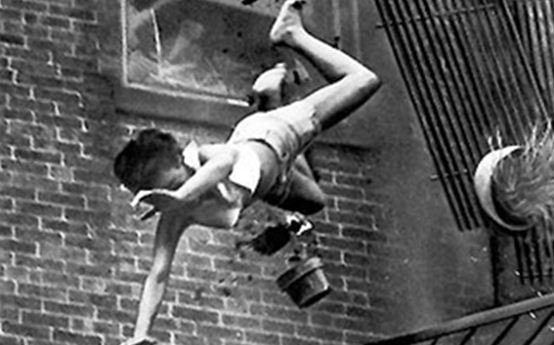
The bird vanished. The doctors in the trauma unit of Beth Israel Hospital made
another examination of their now familiar patient. Their routine report, as
always, unchanged, since the night of her admission-the night she had been found
shattered among the broken beer bottles and syringes on the sidewalk beneath her
6th floor apartment and directly in front of the customers of a sidewalk cafe. A
large card, stuck to the headboard of her bed, still notified the staff of the
ICU of her inert condition:
COMATOSE. CONTINUE INTRAVENOUS.
"Dr. Goldtaker. Do you think she'll ever come out of it?
"Who can say? It's only been three months. Haven't you heard? The interns have a
pool, guessing the day she'll pull out of it, if ever. It's growing almost as
big as the Lotto."
A young man carrying a shoulder sack and wearing a major Hollywood studio
tee-shirt entered the room. An air of guilt had been following him since Heidi's
morbid plunge. It badgered him to recall how he had egotistically pursued his
own career, often at Heidi's expense, neglecting her aspirations and needs, yet
grabbing everything she offered him like a hungry orphan. Very few people knew
the extent of Heidi's contributions to his success and the measure of support
she had given him during his formative years as a filmmaker.
A hospital staff member informed Art that there had been no progress. The cause
of her accident was still unknown and was no longer discussed. The police had
concluded that there had been no foul play and that they would perhaps never
learn if her fall had been accidental or suicide attempt. No one would ever
know, if she didn't recover from her coma.
Eight months later Heidi regained consciousness. She was slowly phased out of
the hospital, and on the day of her release was presented with a dazzling
bouquet of flowers from the doctors and nurses, including a note of
encouragement signed "from all of us" written in Art's most decorative
handwriting.
Art opened the door of the hospital for Heidi as she emerged from the First
Avenue main lobby. Shafts of October sunlight stretched toward her and gave her
a congratulatory warm kiss from the clear unadulterated sky. Her past with Art
seemed far away indeed, as did her other abusive dependencies. Now that she had
made a pilgrimage through the valley of death, the mere presence of his body
seemed mocked by the lasting substantiality she had found in that mythical
place. Even the shadows on the River Styx seemed to have more weight than Art.
She kept the lips of her Psyche sealed tightly around her thoughts, willing to
share such treasures only with the initiated or special spiritual types. Secrecy
had earned her respect since her special journey.
Art, in other words, had become insignificant.
All throughout their relationship, Art had erroneously thought that Heidi's
parents lived in an ashram in Germany, address unknown. It had fallen upon him
to act as responsible family member in the eyes of the hospital administration
and the police when they found his address and phone number in her possession.
He was the one who identified her broken form in the ICU on the night of the
accident, and who signed all authorizations for her immediate medical care. A
cab finally pulled up into the emergency entrance of Beth Israel.
Several ill and coughing homeless folk who were been sitting curbside, praying
and begging for admission, had to jump quickly to get out of the cab's
trajectory toward cash dispensing customers. Art and Heidi quickly entered the
cab. The cab bolted out into traffic and then careened in typical fashion around
a city bus that held up most of the traffic. Heidi sang out with exuberance.
"I think I'll go to Southern California to visit my parents! You thought you
knew all about me Art. Actually ... you don't!"
Art looked out of the window at a group of policemen standing around a mugging
victim, writing out endless reports, talking among themselves and laughing, not
noticing that the mugged businessman was bleeding fatally on the sidewalk,
pleading with his hands for help. Art knew the months ahead would be difficult
for him.
Through her parents, Heidi made arrangements to live in California. The days
went by more tempestuously than the crashing Pacific waves. Art didn't know what
role was required of him when he was around her or was asked by others about
their relationship. He was heard describing to a bartender a new film idea
titled "The Tragedy of Heidi" in an impersonal tone of voice which revealed a
callousness toward her suffering. "It has incredible potential to become a
mega-hit" he was overheard saying by several strangers seated around the long,
horseshoe shaped bar. One of those who overheard was a good friend of Heidi's
and she wasted no time reporting back to Heidi the next day.
After many emotional outbursts and accusations of an intimate nature, Art
accused her of being haughty. Heidi left Art. She told him he needed to be alone
with his fascination with himself and his incipient success. She then flew first
class to Malibu. Her parents, greatly relieved to have her away from her
destructive tendencies, rented her a beautiful bungalow with a sweeping view of
the beach below. From the tranquillity of her bedroom she contemplated the seas
of the world and watched the red ball of the setting sun bleed into the infinity
of the Pacific ocean. It rewarded her in a deeper sense than her discarded,
former pleasures. Heidi took up writing a film script with considerable gusto.
Her health and confidence rose on higher and higher tides of well-being.
Art finally came out to Malibu at about the time Heidi had completed the
withdrawal program and the final draft of her script.
Things hadn't changed much between them during the silent undertow of time. The
encounter was a hollow exchange for both of them, the emptiness of it mercifully
concealed behind a gridlock of courtesies and mock pleasantries. Art returned to
New York after a few days. His film schedules were getting tighter and tighter
and he had to return to Manhattan before things took an unexpected turn.
That's what he told Heidi.
Right before he left, however, Heidi noticed that he had betrayed his real
intentions by exhibiting greater and greater dissatisfaction with her new
independence and strength. Gone forever were the days when she submitted her
services and opinions to him like some kind of dog on its back, waiting for a
belly massage.
Nearly a year later a movie was produced and distributed based on Heidi's script
titled "The Disfigurement of Hope" about a young woman named Hope. The story
came to be known in the industry, particularly in the jargon of the studio press
releases, as a strong affirmation of the courage and nobility of the human
spirit. It starred a young East Village actress who, if not for this lucky
break, would have headed towards unwitting self-destruction. Heidi gained
celebrity status due to the overnight success of her script and the
well-publicized story of her survival after her fall. Investors contributed
without question to whatever new scripts she produced. Their overriding concern
was only that she give her approval for immediate production-films could now be
made nearly as quickly as TV episodes and market forces dictated constant
production.
While reading West and East Coast reviews of her film, and still enjoying the
amenities of her Malibu retreat, a small two-paragraph review on the last page
of the Los Angeles Times arts & entertainment section caught her attention. It
was written by a stringer covering the East Village and the subject was the
directorial disgrace of her former mate, Art.
His film "i am what i am" had flopped into the abyss of reviled box office
disasters. Many elements of his film had repeatedly been ridiculed. Art's
directing career was doomed to be forever confined to his limited scope and
audience in the obscurity of the East Village.
Heidi put down the newspaper, leaned back and fell into an untroubled sleep of
peace, solitude...and gratitude.
####################
WANDERING
by Bryan Adrian
Little mink
scurrying in the mounting snow
seeking shelter
whiskers rippling
helter skelter
paws descending
in movements low
Fear not
the wind swept dunes
nor ice glazed rivers
casting blinding winter light
as swooping swallows importune
sweet rescue from your plight
Listen to your breathing
cut through sheets of cold
a secret sleeping in the silence
to you in fact is told
more bracing
than doubt's scheming
Distant lies a wooded knoll
and welcome comfort cabin
deserted long ago
by woodsmen
quite well rationed
caring nothing
about pelts or stoles
Make haste
before night's curtain falls
to black out your performance
for in that hospice beats
another heart
with Springtime's urgings
and call to mate
a family in the offing
undebated
POEMS
by BRYAN ADRIAN
"Permanent Friend"
As I voyaged on, I met a friend, newly found yet quite familiar.
His was supposedly a shocking personality, a unique blend.
This end of the galaxy sings of similarity.
I ask you, friend, have you the feeling that I am what you are to me?
Are you a concept or are you a pen?
A pen, ink and point, an instrument of the Supreme Will.
I sense that you agree with me, even though you do not speak.
What is it you're doing now?
The way you glimmer, prance and preen,
suggests to me ... you?
... a Queen?
Queen of what?!
You are my imagination.
Your are my love.
You are all there is.
"WHY NOT", by Bryan Adrian
Fighting and fractures and plundering
Ho hum
Man strives for money and energy
Dump truck
Tyrants burp loudly annihilate
Mushroom
Congress embezzles another year
Duck speak
Poultices sanitize hi-tech wounds
Chin up
Hospitals sanctify overdrive
Cancer
Music drones listlessly out our lives
Top ten
Somewhere a mystic's chants mesmerize
Slow down
Industries profit with additives
Defects
Peaches and cream are for everyone
Oh rot
Stop stop stop Stop stop stop Stop stop stop
Why not?
===============================================
THE MISBEGOTTEN
by Bryan Adrian
Eating with face
muzzled to bowl
little baby goo goos
kitty coos
No flame flickers
caressing companionship
incandescent terror alone
projects from ill used eyeslits
No cries of mama papa
evoke sympathetic tears
torrents of parental resentment
drown junior's nightly meal
The creaking of the door
pursued by the smacks of fists
a daily spelling bee
lessons learned at daddy's knee
The dankness of the closet
does not surcease
welts that saddle on
to a black release
Time dimensionless
in suspended animation
measured and regulated
by sheer intensity of pain
A brief fusion
of the opposite sexes
brought into creation
a breathing contusion
The infant a fixture
in a slap happy home
a shadow
of society's seizure
another poem by Bryan Adrian
MARTINIQUE
She has the airs of a Queen
although her eyes betray her
during each mincing
minuet of pomp
when the dukes
and the dauphins
hang out at the rump
sipping Champagne
Her thoughts go down
to the floor of the cabin
where her blacksmith's muscles
hammer out precision
For there she oft felt
her buttocks burn hot
held firm in the hands
of her horseshoer
from the Celtae Lands
(a Huguenot she preferred not,
she hadn't even
one Walloon to her name
for that lot!)
Her royal diet
had been heavy in gold
the sustenance of wheat
was seldom her treat
Like a poor sparrow
fed on such stuff
(she'd been snorting
much too much snuff)
till trapped she became
in this quite silly game
Trains of petticoats
pulled at her waist
yet none of the Court
dared to challenge
her high royal tastes
Or perhaps even show
their true animal faces
(Not even the Picards,
the Condes, nor the Bourbons!)
Emptiness took over
and drained her face pale
the powder and talc
like bread had gone stale
her heart ached daily
until growing quite frail
she craved new sensations
dirt caked
on every fingernail
At last her blacksmith
did something real fancy
he crashed through the ballroom
and crumpled the pansies
(they fought back
like jabbering dandies)
His exit a thrilling
and virile abuduction
without the slightest hint
of staying for luncheon
Once away
from the castle and gardens
and into the fields and forests untrodden
he deflected a spark
with his big hammer's bite
(the petticoats widened
her thighs flew like kites)
The flames
of her belly
licking
vast freedoms
emptying her brain
of scruples and shame
Naked she sang
her song with the doves
filling his cabin
with echoes of love
For decades she blessed him
with legions of babies
the nobles reacted
as if they had rabies
They alerted their goldsmiths
and assembled round the clock
billions of baubles
ant armies
to caravan their adornments
The Order had reacted
as if the whole wide World
-- were indeed --
ABSOLUTE---leeeeeeeeee
forgery -C-R-A-Z-Y !!
================


"Twisted
Whispers"
(a success story)
by Bryan Adrian
Jack, a pharmacist, had been Scott and Brenda's best friend for many years. He
had known Brenda since his days of teenage lust which he had shared with her.
Everyone found it remarkable too, how deeply he had earned Scott's trust over
the years, despite his status as her schooldays "former lover."
Today, Jack hesitantly told all the relatives of Scott and Brenda assembled at
the funeral that "the sum of Scott and Brenda's married life for the last
decade weighs 22-pounds."
This weight included the fabric of the coarse thick sack containing the
unaltered ashes of the couple. Each word was difficult for Jack to pronounce at
the funeral. He said them, nonetheless, with a gentle authority. Jack knew several
of the details of Scott and Brenda's deaths with precision, and not due merely
to his scientific training.
He delivered the epitaph at the burial proceedings over in Oyster Bay,
When a team from the coroner's office first arrived at the site of the housefire, they sighed relief to
hear that the firemen had extinguished the flames before the fire could spread
to other homes in
One of the city officials at the scene indulged in black humor and joked about
the deaths as "eternal homelessness" and "permanently checking
out." An African-american EMS driver who had
chauffeured Scott on a few occasions when he was a part-time limousine driver
employed by the insurance company which Scott managed suddenly shouted out
"now that sucker know what it be like to be black!"
Being burned out and run out and black in
Years before this marital holocaust, Scott and Brenda had shared consuming
passions. Love had flourished in the mixed blood of their marriage for a long
and happy time. In those days they resembled a pair of dewy and decorative
tulips, one white, one black, in the grassy meadows of
the secluded North Shore of Long Island. Now, ten years later, nothing remained
but a mound of ash bundled up in a canvas sack. Ashes of the
same color and composition.
The police determined Scott and Brenda's deaths to be "accidental."
They quickly negated all suspicions of foul play, especially a crime of
passion.
Jack the pharmacist, however, knew several nefarious details. Details which had been stabbed into his ears by twisted whispers
through the receiver of his
Scott and Brenda simultaneously, yet independently and without consulting the
other, decided to torch their "till death do us part" partner in a housefire and to make it look accidental. It seems that
throughout their years together they had become a marriage of equals. Sometimes
a submerged thought in one of them that was just beneath consciousness became a
full-blown idea in the head of the other. The scheme seemed a perfect plan. The
living spouse would collect a handsome insurance payment. A
nice hedge to beat back the endless years of global depression. The
corrosive effect of cruel economic cycles and the increasing unreliability of
their friends unhinged them and propelled them to act beyond reason and above
the law. They had both become now initiates amongst the criminally insane.
Their marriage had survived many body blows during the bleak Dubya Bush years.
In-laws suddenly developed racist attitudes, maligning each other because of
the different color of their skin. They never looked at the spiritual poverty
of the times nor at the sinister hypocrisy of many top
layers of government as the probable cause. Hate and discontent were
monstrously born from what had been at one time only minor social differences.
Community values were replaced by communal hatreds. Scott and Brenda were
driven apart and so were their friends and relatives, often on the basis of
race. The international economic paralysis brought out the beast from the belly
of the competing classes, separated from each other by limitations and
imbalances, everything contingent upon economic mobility and race, which in its
darkest heart was singly about money and class. Murder was continuously
broadcast on television dramas, without any moral or political point. Such
cultural developments promised to spew out toxins much deadlier than simply bad
television advertisements and pointless productions bordering on carcinogenic.
Everyone started to think, "Why blame a guy, when he's up against the
wall, to scheme a bit and get by? Any sucker next to me had better fend for
himself, dammit!" With unblinking eyes millions of viewers were washed by
waves and waves of electromagnetic garbage, the selfish and childish themes
repeated night after night on television, sandwiched between advertisements
that demanded more and more product consumption, requiring lots of money that
not many really had anymore, to feed an endless anti-spiritual appetite.
Neither Scott nor Brenda had ever suspected Jack of leading them skillfully to
execute their secret schemes in absolute synchronicity, one against the other.
They never realized that Jack harbored an age old class-grudge against each of
them for having established themselves into their much higher Oyster Bay social
station, rather than toiling like himself in his bleak and humble
Jack shed a minuscule tear as he dredged up yet another time, in the asylum of
his evil thoughts, each lethal sequence of events which had lead to the double
murder. He tried to control himself, but couldn't refrain from crying out loud
and betraying his large dry eyes. His masterly woven crime wore the blemish of
an imperfection. "Good lord!" he blurted out. It couldn't be true. A
small detail had been overlooked. This kind of trifle always bothered him
endlessly. One time he had measured out a prescription for a customer one pill
short and nearly drove off the road thinking about it. His most recent
oversight, however, could get him grilled in the big electric chair. Then, he
too would be a loser and not one of the few lucky winners in the game of
trade-offs, sellouts, rip-offs and betrayals on the national social scoreboard.
Such failure felt to him even more difficult to endure than a slow and painful
death.
Francine, the young cashier from Flatbush he hired less than half-a-year
earlier, could possibly tip the scales of all his dead reckoning. She was only
nineteen years old, cute, shapely and a very competent cashier. Nearly all the
male customers, young and old, lingered at the over-the-counter medicaments
rack to get a better look at her. Jack had never hired an employee like her throughout
his entire career. He was very proud of her. He always let his male patrons
linger and lounge their eyes on her body as long as they needed, unlike the
manager of
It didn't take Francine long either to help Jack discover that her commendable
cashiering skills were dwarfed when compared to her superior gifts in the art
of backroom sex. She even did it with a smile. A wide,
welcoming, enveloping smile. Somehow, every time he sighed in ecstasy,
Jack knew that this habit would one day extract an unseen price. Especially
when she begged him not to stop and snorted in pleasure during the moments
leading up to her climax when she rushed towards it like a thoroughbred
racehorse nearing the finish line. At worst, he reckoned she would ask him some
day for a promotion to the assistant manager's position. He might even have to
pay for her medical insurance. This thought caused him terrible distress.
He never suspected her to have blackmail on the bottom line of her personal
accounting. Now he felt foolish for not having seen that her evil side neatly
matched his own. Yet his envy of Scott and Brenda's success continued eating
away at him with a hunger that devoured him, despite the conventional wisdom he
had accumulated throughout his lifetime, and made him fallible. His greed was
constantly fueled by the stories in the papers about Lotto winners and the corporate
raiders pillaging the concrete canyons of the Wall Street area and of
stupefying embezzlements on almost every
Francine's hunger for money and success was only just beginning to bud.
Francine had a disturbing habit of eavesdropping momentarily on some of Jack's
personal phone calls at the drugstore. He tolerated this because Francine gave
him what his wife wouldn't give him by choice. Sexual
gratification. Their marriage was both frigid and childless, in that
order. All along he had thought that his sessions with Francine were only a
minor indulgence on his part. Now he swallowed with difficulty as he remembered
how imprudent he had been to conspire against Scott and Brenda on the telephone
at the store. He had always prided himself on Francine's submission to his
authority and had never once considered her in his detailed precautions. He
certainly had underestimated the skillful range of her activities.
Jack looked down again at Francine's slender legacy. Her
letter of resignation. Minutes earlier she had walked out on him, saying
he had better come up with $350,000 if he wanted her to keep her lush succulent
red lips still. She gave him one week to make up his mind.
This would be long enough to devise a plan to silence her, Jack told himself
after he had thought long and hard upon the matter. He marshaled out his
invincible logic, an aptitude that helped him build up his small business when
he was younger. That nearly forgotten period of his life proved to him that he
had the iron will necessary to eliminate former friends and classmates who were
in the same business, also struggling to make a living, but had unfortunately been
in his way. As Jack measured out the next customer's prescription a solution
came upon him in a rush.
Slip a deadly compound into her regular beverage which she kept stocked in her
refrigerator made up of chemicals leaving no trace of their effect behind in
any unnatural way. A much less complicated project than Scott and Brenda he
realized with satisfaction. He wouldn't have to invest much emotion in this
exercise either. Brenda and Scott had been different. He had nearly reached
with Brenda the plateau that poets have indiscriminately labeled
"love" in the excesses of their inspirations, and he had also felt
unusually comfortable with Brenda's family in
Jack called his widowed mother in Bushwick where she had her little cottage to
confirm his dinner with her at her home for that Saturday night. She asked him
if he could stay over part of the weekend and help her with some lifting and
gardening. He quickly answered yes, knowing full well that this was an
iron-clad alibi. He then measured and mixed his solution from a few of the many
viles and bottles on the rows and rows of shelves. His measurements were
sure-fingered and smooth.
"How unfortunate that she must die," he thought to himself, as he
finished off the last touches of orchestrating Francine's elixir. She was so
much like himself, he reflected proudly, and she had
shown an extraordinary level of endowment and gumption to get ahead. She would
have gone far in
He knew her death would be a great loss, to his working class pharmacy, and to
the world at large. He sighed a moment, set his watch, pulled down the iron
shutters and adroitly padlocked the heavy iron doors of his store on his way
home.
#######################
 Bryan Adrian resume and writing sample links:
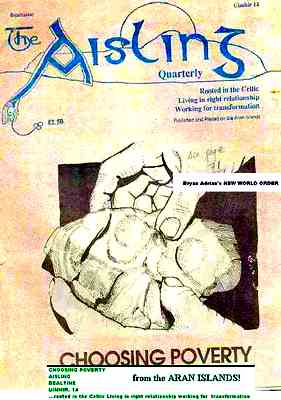
POETRY by Bryan Adrian published in "AISLING," in the Aran Irish-Scottish Isles http://boudiccaarran.tripod.com/bryanadrian.html
Bryan Adrian's iREPORTS
on CNN online's "
http://ireport.cnn.com/docs/DOC-628249
http://ireport.cnn.com/docs/DOC-628246
http://ireport.cnn.com/docs/DOC-628247
http://ireport.cnn.com/docs/DOC-628248
REVIEWER for TripAdvisor -- http://www.tripadvisor.com/members-reviews/bryan-in-tbilisi
